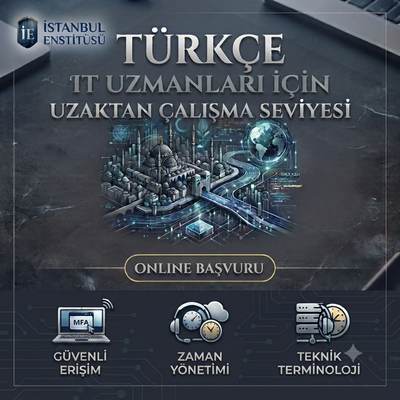
As a remote-working IT professional collaborating with Turkey-based teams or clients, fluent Turkish significantly boosts your competitive edge. İstanbul Enstitüsü's Turkish for IT Professionals program was designed exactly for this need.
Unlike general language courses, this program focuses directly on the terminology and scenarios used in software development, DevOps, project management, and remote team communication — so every word you learn immediately finds its place in your real working life.
What Will You Learn in This Course?
Technical Terminology — Turkish terms frequently used in software development, infrastructure, and project management
Remote Team Communication — Effective communication in virtual meetings, stand-ups, and written reports
Written Technical Communication — Skills for writing emails, Slack messages, and documentation
Confident and Professional Expression — Speaking Turkish with confidence in business meetings and client presentations
Time-Management-Focused Scenarios — Coordination language for teams working across different time zones
Sector-Specific Abbreviations and Jargon — Recognizing abbreviations and expressions used daily in the IT sector
Who Is This For?
Developers, DevOps engineers, and project managers working remotely with Turkey-based companies or teams
IT professionals in regular communication with Turkish clients or business partners
Technology professionals aiming to expand their career into the Turkish market
Those wanting to take their basic or intermediate Turkish knowledge to a sector-specific level
Program Details
Focus Area: IT and Remote Work Terminology
Instructor: Experienced in both language teaching and the technology sector
Content: Prepared specifically for you and your company
Certificate: Certificate of completion at the end of the program
Why Choose İstanbul Enstitüsü?
Thousands of students have reached their goals thanks to our individually prepared programs. This program, designed for the IT sector, goes beyond a general language course to address your professional needs directly — because the right terminology means the right communication.